
- Welcome
- Background Sources
- Primary vs. Secondary Sources
- Primary Sources
- Secondary Sources
- How to Use the Databases
- Citing & Evaluating Information

 Robyn Slusher
(763) 433-1819
Coon Rapids Campus
 Gina Pancerella-Willis
(763) 433-1197
 Juliana Boner
(763) 433-1358
When accessing library resources off campus, simply log in with your username (StarID@go.minnstate.edu) and password when prompted.
Need help? The library is here for you. Reach out anytime with questions, and we'll be happy to assist you!

Good sources of background information include:
- Encyclopedias
- Dictionaries
- Bibliographies
- Reference books and eBooks
Using background sources can help you:
- Learn important terms and key ideas related to your topic
- Discover other useful sources and research materials
- Understand what experts already know and say about the subject
 Britannica Academic
Find reliable information on countries, cultures, and world events. Includes encyclopedia articles, multimedia, timelines, maps and country statistics for research exploration.
 CIA World Factbook (archived version)
Looking for information about the United States? Even though the CIA World Factbook has been taken down, you can still use this archived version from February 2026. Click Countries at the top of the page or search for a country by name. Most entries include flags, maps, and a bried introduction that can help you learn about the country's history and key facts.
 Funk & Wagnalls New World Encyclopedia
This resource provides thousands of concise, reliable articles that can help you build background knowledge on a wide range of subjects, including science, history, art, technology, and current events.
 MAS Complete
Full text reference books, biographies, primary source documents, photos, maps, and flags.
MAS Reference eBook CollectionThis collection of reference ebooks provides trustworthy background information on topics such as biography, history, careers, language arts, literature, government, health, math, science, current events, etc.
 World History Encyclopedia
A trusted, free history resource created by a non-profit organization. Explore articles, interactive timelines, and maps to help you learn more about historical events and people.
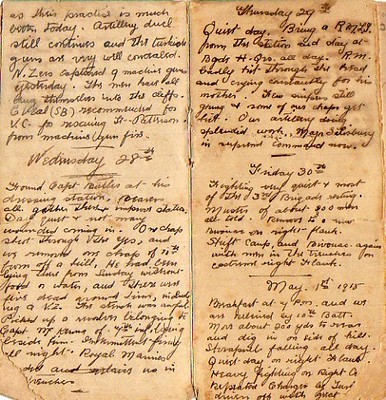
- Original laws, government documents, and historical records.
- Newspaper articles written by reporters who witnessed an event or interviewed people involved.
- Speeches, diaries, letters, journals, and interviews created by people who experienced the event.
- Original research studies and scientific experiments.
- Data collected from surveys, censuses, or economic reports.
- Photographs, videos, and audo recordings that capture real events as they happened.
(Photo credit: Ellen Thompson, page six and seven of Diary of Joseph Cecil Thompson in April 1915).
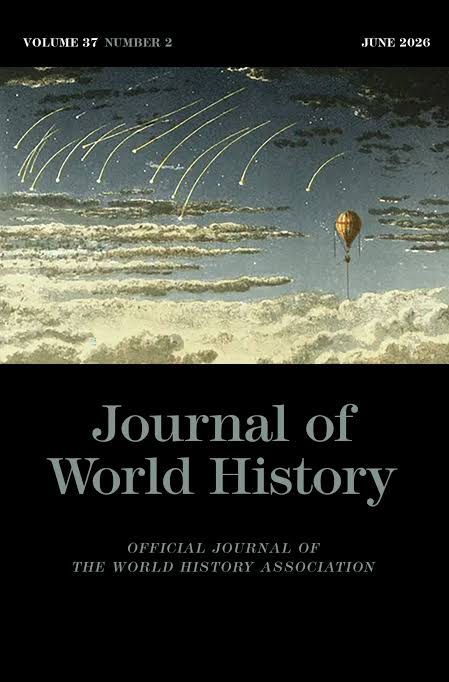
- Most books written about a historical event, person, or topic.
- Articles that analyze or explain research findings, data, or trends.
- Scholarly journal articles written by experts who are studying a topic rather than participating in it.
- Biographies written about someone's life.
- Documentaries that explain or interpret events (although they may include primary sources such as photos, videos, or interviews).
For example, a biology textbook is usually considered a secondary source in biology because it explains and summarizes scientific research rather than presenting new discoveries.
However, if you're studying the history of science education or how textbooks have changed over time, that same biology textbook could be a primary source. In that case, you would be examining the textbook itself as evidence of what students were taught during a specific time period.
Try searching words like:
- documents
- texts
- photographs
- maps
- "primary sources"
- "personal narratives"
- diaries
- interviews
- "oral history" or "oral histories"
- testimony
Example search: (segregation OR "jim crow") AND (documents or diaries)
 Historical Minnesota Newspapers
Search historical newspapers from the Minnesota Historical Society's collections by county, city, or publication date.
Newspaper SourceSearch full-text articles from hundreds of U.S., international, and regional newspapers, plus TV and radio news transcripts from major networks.
 Star Tribune
Access current and historical Star Tribune articles with full-text coverage dating back to 1986.
 U.S. Newsstream Collection
Explore recent and historical U.S. news from newspapers, newswires, blogs, and news sites. Access full-text articles and archives dating back to the 1980s.
How to Google for Primary Sources - Search Terms
Evaluating Primary Sources Online - Cultural Herigate Websites
 American Antiquarian Society (AAS) Historical Periodicals
Step back in time with over 7,500 primary sources from 1691 to 1895, offering firsthand perspectives on early American history and culture.
 Discovering American Women's History Online
Access digital collections of primary sources that document the history of women in the United States, including photographs, letters, diaries, artifacts, and other firsthand historical materials.
 Fordham University's Internet Modern History Sourcebook
A collection of primary and secondary historical sources covering world cultures, civilizations, and major historical events. Search for a country name to find relevant materials, then use Ctrl + F on a page to quickly locate mentions of your topic.
 HathiTrust
Provides access to millions of digitized books and other resources on topics ranging from history and literature to science and health. Explore materials in hundreds of languages from libraries around the world, making it a great source for research, projects, and exploring new interests.
 JSTOR
Explore original sources from many subjects, including letters, diaries, manuscripts, oral histories, government documents, images, maps, artwork, and more.
 Library of Congress Digital Collections
Browse online primary source collections to find photographs, maps, letters, diaries, newspapers, oral histories, sound recordings, and historic films that bring the past to life.
Library of Congress World Digital Library
Discover primary sources from around the globe, including historical books, maps, images, and documents from libraries, museums, and archives worldwide.
To find sources for your topic, search for a country name, then use the filters to narrow results by century. Each item includes citation tools to help you properly credit your sources.
 Minnesota Digital Library
Explore photographs, documents, maps, and other historical materials from libraries, archives, colleges, universities, and historical societies across Minnesota. Discover primary sources that help brin Minnesota's history to life.
 Reference and User Services Association - History Section
Find free primary souce collections covering key events and time periods in American history. Resources are organized chronologically, from Colonial America to the early 21st century, making it easy to explore the people, events, and ideas that shaped the United States.
 Umbra Search African American History
Access digital collections of primary sources that document African American history and culture. Explore photographs, letters, documents, and other historical materials preserved and shared online by libraries, archives, and museums.
 Academic Search Premier
Explore thousands of trusted academic articles and journals on almost any topic. Perfect for papers, projects, and deeper research.
EBSCO DatabasesExplore information on topics like art, business, health, psychology, and more. Search a single EBSCO database or search across all 43 databases at once to find articles, journals, and other reliable sources.
 Exploring Race in Society
Explore reliable information on race, ethnicity, diversity, equity, and inclusion. This database offers articles, reports, and other resources to help you better understand a wide range of social and cultural issues.
JSTORExplore 12+ million articles, books, images, and primary sources across 75 subjects to find trustworthy information for your research.
 Films-on-Demand: High-quality video and multimedia for academic, vocational, and life-skills content.
 Kanopy: On-demand streaming platform that offers a large collection of award-winning films and documentaries. You will need to create a free Kanopy account and sign in to access the collection.
Picking a Topic is Research
How Library Stuff Works: How to Choose Keywords
How Library Stuff Works: Boolean Operators (AND OR NOT)
On the web, it can be a challenge to know what information is credible and accurate. You may have heard about the CRAAP test (more information here), which consists of criteria to help evaluate a website.
To complement this strategy, digital literacy expert Mike Caulfield developed the SIFT method, which provides additional valuable strategies for online researchers.SIFT, or the Four Moves:
S - Stop
I - Investigate the source
F - Find additional sources/better coverage
T - Trace Information back to the original context
Online Verification Skills - YouTube videos from Mike Caulfield
Additional guides to help you evaluate your sources:
Evaluating Resources (University of California, Berkeley)
Evaluating Information (American Library Association)
Critically Analyzing Information Sources (Cornell University Library)
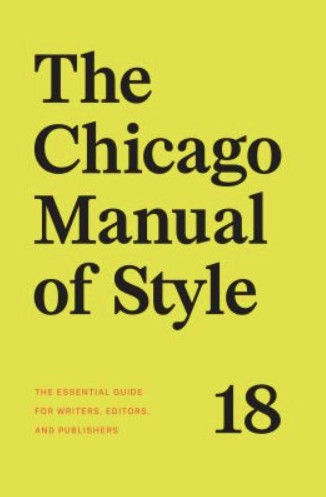 The Chicago Manual of Style, by University of Chicago Press Editorial Staff
ISBN: 9780226287058
Publication Date: 2024
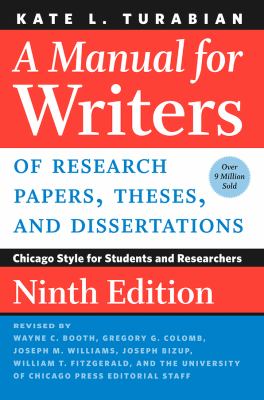 A Manual for Writers of Research Papers, Theses, and Dissertations: Chicago Style for Students and Researchers
ISBN:9780226430577
Publication Date: 2018
Looking for information about citing your sources? Different styles like APA, Chicago, and MLA will require you to format information and sources differently.
After using any of these resources, always double-check your citations against the most current published guide. Below you will find resources for the most commonly used citation styles from the style guide homepages, as well as, the Purdue University Online Writing Lab (OWL).
- CMS - Chicago Manual of Style covers a variety of topics from manuscript preparation and publication to grammar, usage, and documentation. CMS Quick Chart
- Turabian - A Manual for Writers includes comprehensive guidelines for formatting papers, style guidance, and citation formatting. Citation Quick Guide.
Here is an introductory guide to the Chicago Manual of Style from the Purdue Online Writing Lab (Purdue OWL).
When permissible to incorporate information that is generated by AI in your work, make sure that you are citing the AI tool wherever you include, quote, or paraphrase the information generated by AI. Use the information below to learn more.
You can find more information about using artificial intelligence and college policies through the library's guide on AI.ARCC Tutoring web page: http://www.anokaramsey.edu/resources/tutoring-services/
Email: writing.tutoring@anokaramsey.edu
Citing your sources in a bibliography is a required part of the research process. It allows others to verify your information and acknowledges the previous work of other researchers and writers.
Click here for a General Guide to Understanding Written Plagiarism