
- Getting Started
- What is Creative Commons?
- Copyright Basics
- Public Domain
- Anatomy of a CC License
- CC License Types
- How to Apply a CC License
- Open Access and Open Education Resources (OER)
- Adapting and Remixing CC Licensed Works
- Evaluating Open Resources
- CC Licenses and Traditional and Indigenous Knowledge
- Find CC Licensed Works
- Learn More About the Open Movement

What Is Creative Commons?
An introduction to Creative Commons and why it exists as an alternative to “all rights reserved” copyright.
Copyright Basics
A basic overview of copyright, why it exists, and how Creative Commons is built upon copyright.
Public Domain
An explanation of what the public domain is and why it matters.
Anatomy of a CC License
A breakdown of the different elements that make up a Creative Commons license.
CC License Types
An overview of the six main Creative Commons licenses and public domain indicators.
How to Apply a CC License
Guidance on choosing and applying a Creative Commons license to your own work.
Open Access and Open Educational Resources (OER)
How Creative Commons supports Open Access publishing and the creation and use of OER.
Adapting and Remixing CC‑Licensed Works
What is allowed when revising, remixing, and building on Creative Commons–licensed materials.
Evaluating Open Resources
Tips for evaluating open access and OER resources.
Considerations when Creative Commons and copyright intersects with Indigenous and traditional knowledge. systems.
Find CC Licensed Works
Tips and resources for finding CC licensed works online.
Learn More About the Open Movement
Learn more about how to get involved in the Creative Commons and Open Movement communities.
This resources guide is created by Keith Cich under a CC-BY 4.0 license.


Creative Commons (CC) is a nonprofit organization created to provide more flexible licensing options than the traditional ‘all rights reserved’ approach of standard copyright. Creative Commons licenses make it easier for people to share and reuse creative works while still operating within copyright law.
The year is approximately 560 CE, and two Irish monks, Columba and Finian, are disputing over a collection of psalms. Columba borrowed a psalter owned by Finian and made a copy of it for his personal use.
Finian claimed that copying his book without permission was theft. Columba believed that those who possess knowledge are obligated to share it, and that keeping it to oneself was a much graver offense than copying.
Finian appealed to King Diarmait mac Cerbhiall, who ruled in his favor, stating, ‘To every cow belongs its calf; to every book its copy.’
This ruling eventually led to the Battle of Cúl Dreimhne, also known as the ‘Battle of the Books,’ in which over 3,000 lives were lost.
Sources:
Suehle, R. (2011, June 9). The story of St. Columba: A Modern Copyright Battle in Sixth Century Ireland. Opensource.com. https://opensource.com/law/11/6/story-st-columba-modern-copyright-battle-sixth-century-ireland#comments
Copyright Today
Fast forward nearly 1,500 years, and many of the same disputes found in the story of Columba and Finian continue today. From music sampling to derivative works of art, disagreements persist over how human creations can be used and shared.
To complicate things further, unlike handwritten manuscripts, the internet allows content to be created, copied, and shared instantly (both legally and illegally) across the world. While this makes connecting and sharing easier than ever before, it also introduces significant challenges for copyright law which is often regional and differs from country to country. How do we regulate the sharing of content on a global scale?
Copyright Expansion and its Critics
In 1998, the Sonny Bono Copyright Term Extension Act (CTEA) was enacted, extending copyright by 20 years to cover the life of the creator plus 70 years.
The CTEA is also known as the ‘Mickey Mouse Act’ because it went into effect just before the Disney cartoon Steamboat Willie would have entered the public domain.
Law professor Larry Lessig argued that the copyright extension was unconstitutional. The purpose of copyright limitations is to ensure that works eventually enter the public domain, where the general public can learn from and expand upon them.
Copyright limitations were also meant to incentivize creators to share their work by granting a limited monopoly. Continual extensions are at odds with this goal.
Lessig represented Eric Eldred, a web developer whose livelihood depended on the reproduction of works that enter the public domain. Eldred was joined by commercial and non‑commercial publishers, including Dover Publications.
The case reached the Supreme Court, where Eldred ultimately lost. The Court ruled that Congress has the authority to extend copyright terms, as long as a time limit exists (Wikipedia, 2026).
Sources:
"1.1 The Story of Creative Commons" by Creative Commons. CC BY 4.0.
Wikimedia Foundation. (2026, January 20). Eldred v. Ashcroft. Wikipedia. https://en.wikipedia.org/wiki/Eldred_v._Ashcroft

"Expansion of U.S. copyright law" by Tom Bell License: CC BY-SA 3.0
In 2002, Creative Commons was founded as a nonprofit organization to provide new, more flexible licensing options beyond the ‘all rights reserved’ limitations of traditional copyright.
While there are many reasons for adopting a Creative Commons license, a core principle is that content is built around and expresses the values of communities, rather than existing solely as a commodity.
Creative Commons’ vision is "a world where education, culture, and science are equitably shared as a means to benefit humanity."
Sources:
"1.1 The Story of Creative Commons" by Creative Commons. CC BY 4.0.
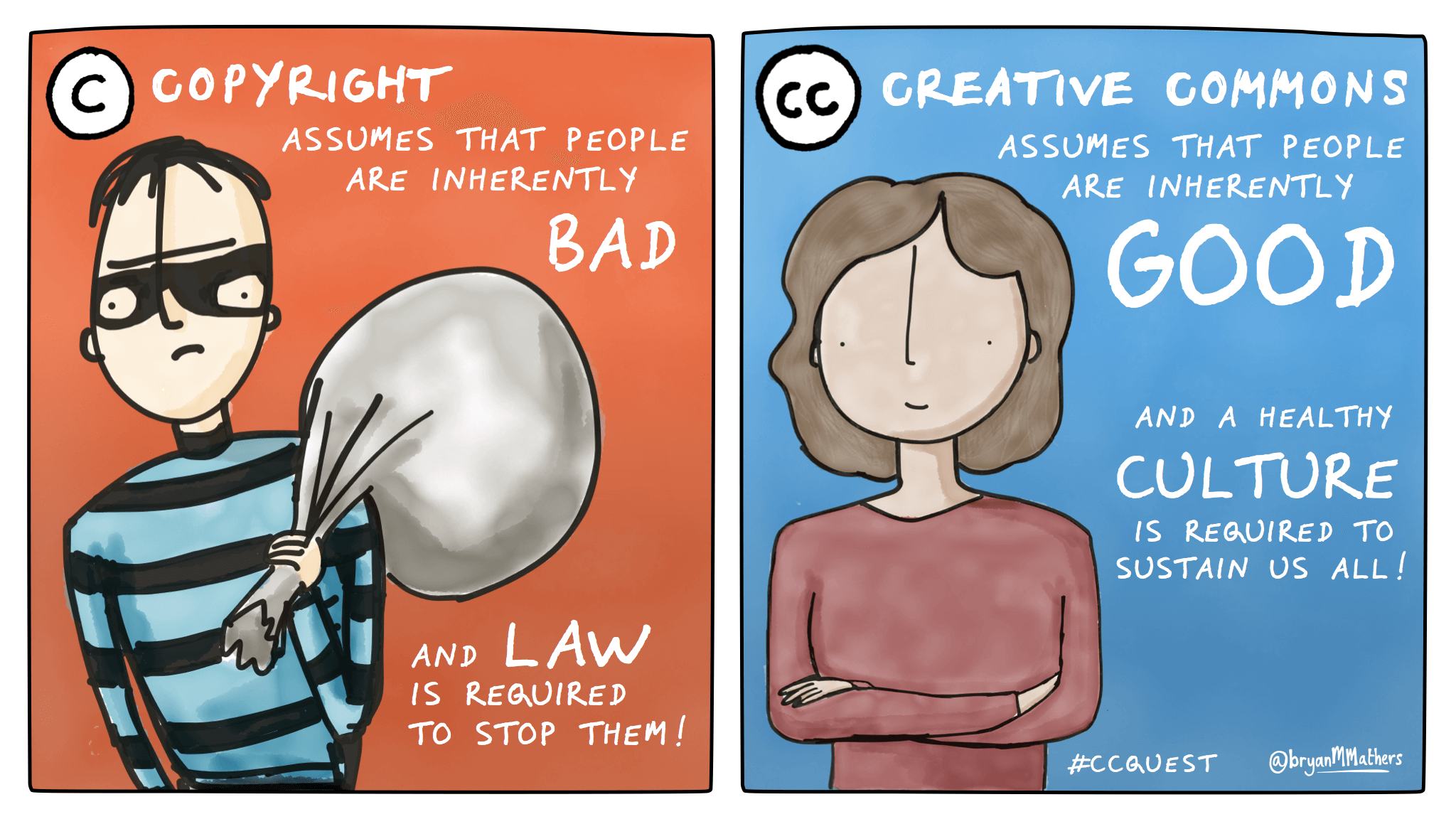
Copyright vs. Creative Commons by Visual Thinkery is licensed under CC-BY-ND
- Trademarks: Protects brands, words, logos, symbols, and even sounds that help distinguish a business and its services
- Patents: Protects inventions. Inventions must be both new and useful to receive a patent.
- Trade Secrets: A business' practice provides anadvantage to the business by being kept secret from the public (secret recipe, formula, design, etc.)
TrademarkGroup. (2012). How to Register a Trademark (Canada): Trademarks, Patents and Copyrights - What’s the Difference? YouTube. https://www.youtube.com/watch?v=IVYAOy466vs
Copyright law grants exclusive rights to a creator or copyright holder over their work for a limited amount of time. These rights allow the creator to set rules for how the public can access and use their original works.
At the same time, copyright law also gives users specific usage rights without needing to ask permission from the creator.
What is the Purpose of Copyright?
The purpose of copyright is often described through two schools of thought:
- Utilitarian: Argues that copyright exists to benefit society by incentivizing creation and encouraging creators to share their work. These works eventually enter the public domain, benefiting the public.
- Author's Rights: Emphasizes the moral connection between authors and their works. Under this view, creators have the right to be credited for their work and to control how it is used and distributed.
"2.1 Copyright basics" provided by: Creative Commons. License:CC BY: Attribution
- Economic Rights
- Right of reproduction
- Right to publicy perform or broadcast
- Right to adapt (derivative works)
- Moral Rights
- Right of attribution (paternity)
- Right of the work's integrity
"2.1 Copyright basics" provided by: Creative Commons. License:CC BY: Attribution
These rights include the educational exceptions of "fair use" or "fair dealings."
How Limitations are Defined
Limitations and exceptions are written into copyright law either as specific lists of permitted actions or as open-ended guidelines. Lists provide clarity but little flexibility if a particular action is not listed. Guidelines allow adaptability over time but may create uncertainty about what is and is not allowed.
Sources:
"2.1 Copyright basics" provided by: Creative Commons. License:CC BY: Attribution
Sources:
"2.1 Copyright basics" provided by: Creative Commons. License:CC BY: Attribution
In the United States, the work must also be fixed in a tangible form—such as text, video, audio, or an image—to receive copyright protection.
Expressions Not Ideas
An important distinction to make when considering copyright is that only expressions of ideas and facts are protected by copyright, not the ideas and facts themselves.
Copyrightable Works
Copyright applies to the broad category of "literary and artistic works". This includes:
- Literary works and collections
- Musical and dramatic works
- Artistic works
- Audiovisual and cinematographic works
- Databases
- Computer software
Examples of ideas and facts that are not copyrightable include names, titles, short phrases, fonts, blank forms and familiar symbols and designs (U.S. Copyright, Circular 33)
Sources:
"2.1 Copyright basics" provided by: Creative Commons. License:CC BY: Attribution
United States Copyright Office. (2021, March). Circular 33: Works not protected by copyright. Copyright.gov. https://www.copyright.gov/circs/circ33.pdf
What Can You do with Public Domain Works?
There are generally no restrictions on a work that has entered the public domain. You can use, adapt, remix, etc. without permission.
Remember that copyright length varies from one country to the next so what's in the public domain for one country may still be under copyright in another.
For example, The original Winnie-the-Pooh book by A.A. Milne, published in 1926, entered the US public domain in 2022.
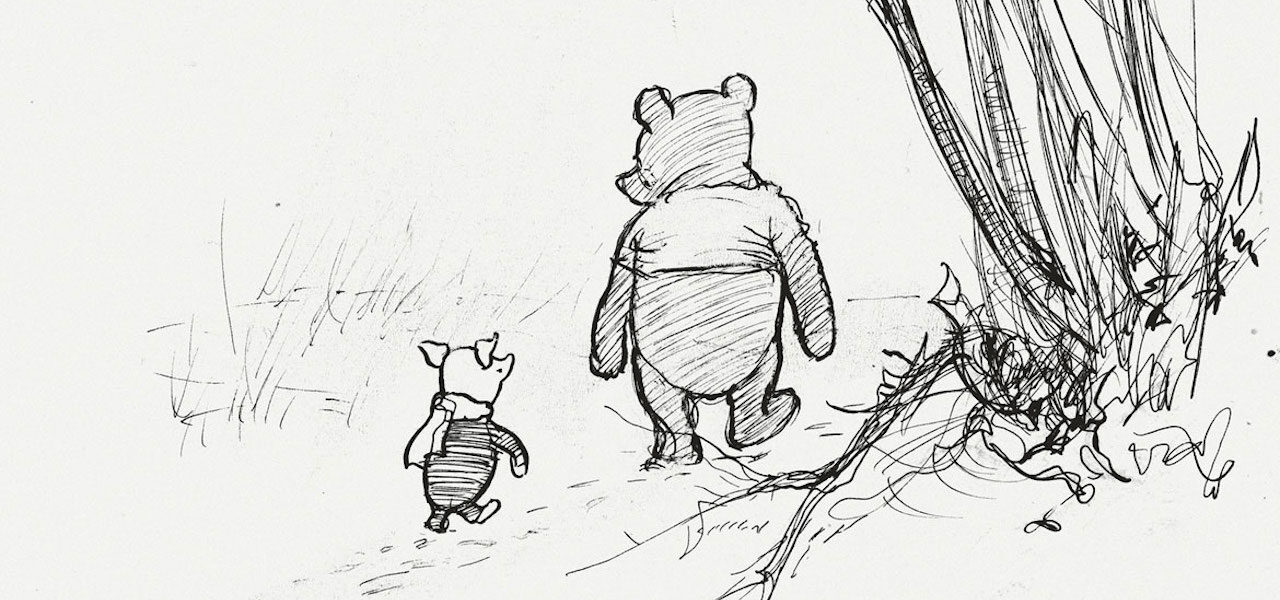
Because the character Winnie-the-Pooh is now in the public domain, it can be be adapted and altered without restriction. This has resulted in various new works including a 2023 horror slasher film Winnie-the-Pooh: Blood and Honey.

Jagged Edge Productions, ITN Studios - https://media.fetch.fm/altitude-film-entertainment/altitude-film-entertainment-winnie-the-pooh-blood-honey/
Moral Rights and the Public Domain
While there are very few restrictions on public domain usage, there are countries where moral rights do not expire with the copyright.
In these cases, you are required to give the creator attribution when using their work.
Even when not required, it is still good practice to credit an author when making use of their work.
Sources:
"2.3 The Public Domain" provided by: Creative Commons.License:CC BY: Attribution
- Project Gutenberg - Free access to a library of over 75,000 eBooks.
- Public Domain Review - A site dedicated to the exploration of curious and compelling works from the history of art, literature, and ideas in the public domain.
- Digital Public Library of America - Millions of materials from libraries, archives, museums, and other cultural institutions across the country.
- Wikimedia Commons - A large collection of freely usable media files.
- Internet Archive - A non-profit library of millions of free texts, movies, software, music, websites, and more.
- Library of Congress - An expansive, ever growing collection of digitized items from the Library of Congress' holdings.
are legally enforceable.
Common Deeds: The “human-readable” layer. A short summary of the terms and
conditions written in language that is accessible to humans but still accurate to the legal
requirements.
Machine Readable: The “machine-readable” layer that allows applications, search engines
and other technology to find and identify the type of CC license designated to a work.
 |
 |
 |
 |
| BY | SA | NC | ND |
BY: BY signifies that when reusing a CC licenses work, the user must give proper attribution
to the original creator.
ShareAlike (SA): SA signifies that any adaptations made by the user must be shared under the same CC license as the original work.
NonCommercial (NC): NC signifies that a work cannot be used for commercial purposes.
NoDerivatives (ND): ND signifies that users are not allowed to adapt or modify the work.
CC licenses only apply to copyrighted works. They cannot restrict works in the public domain or items considered uncopyrightable (ideas, facts, etc.). The two public domain badges above are considered tools to help identify public domain works and are not CC licenses.
CC licenses do not protect patents or trademark.
CC licenses are not encouraged for software as there are better software licenses available.
Sources:
“3.1 License Design and Terminology“ by Creative Commons licensed under CC BY 4.0.
“3.2 License Scope” by Creative Commons licensed under CC BY 4.0.
| Public Domain Mark: This work is free of any known copyright and may be used without restrictions for any purpose. | |
 |
CC0: The creator has voluntarily waived all copyright interests. This work may be used without restrictions for any purpose. |
 |
CC BY: Give attribution to the creator (required for all licenses). |
 |
CC BY-SA: Give attribution to the creator and share any adaptations using the same CC license as the original work. |
 |
CC BY-NC: Give attribution to the creator and no use for commercial gain. |
 |
CC BY-NC-SA: Give attribution to the creator and share any adaptions using the same CC license as the original work. |
 |
CC BY-ND: Give attribution to the creator and no adaptation allowed. |
 |
CC BY-NC-ND: Give attribution to the creator, no use for commericial gain and no adaptations allowed. |
Sources:
“3.3 License Types” by Creative Commons licensed under CC BY 4.0.
“Public Domain” by Creative Commons licensed under CC BY 4.0.
Examples of communicating your CC license could include:
- Text in your content stating the licence type (example: © 2026. This work is openly licensed via CC BY 4.0.
- Embeding/coding the license information into the HTML of your page/content.
Creative Commons provides a Chooser tool to help creators find the best type of CC license for their work.
The graphic below show the permissions that are allowed or restricted based on the CC license type applied:
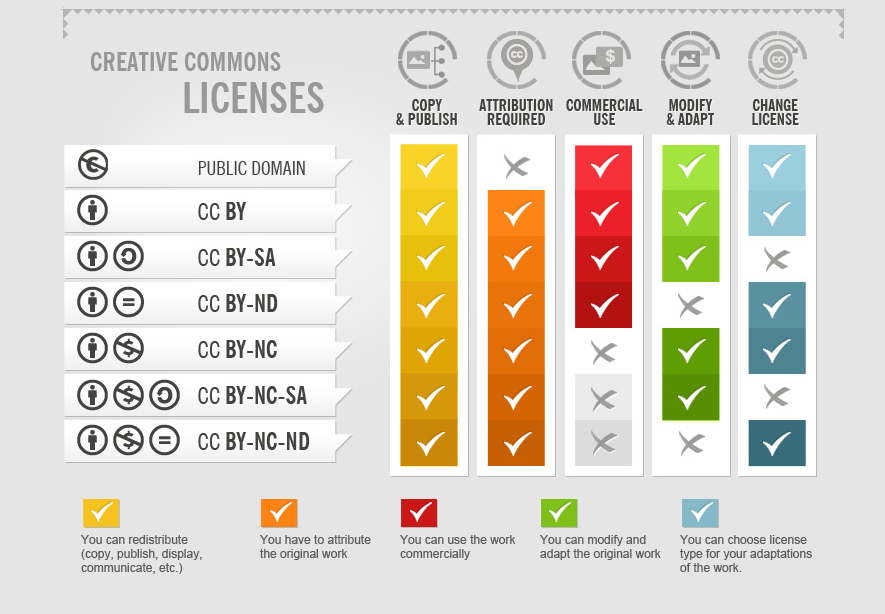
How To Attribute Creative Commons Photos by Foter, licensed CC BY-SA 3.0
Sources:
About CC licenses. Creative Commons. (2023, September 28). https://creativecommons.org/share-your-work/cclicenses/
Get a CC license. put it on your website. Creative Commons. (n.d.). https://creativecommons.org/get-cc-savvy/get-a-cc-license/
Open Access (OA) refers to articles and other online materials that are free to use and share without the need for payment or special permission.
Features of Open Access:
- Free Access: OA is freely available to the public and can be accessed online through the public internet without financial, legal or technical barriers.
- Free to Use and Share: OA resources are searchable and accessible online and the full text can be copied, downloaded, shared, and linked to.
- Credit for the Creator: Copyright is still applicable to all OA resources, ensuring the author is properly attributed and their work is used as intended.
“5.1 Open Access to Scholarship” by Creative Commons licensed under CC BY 4.0.
Though most scholarly work is created with the support of public funding and is done by public researchers, traditional publication methods often involve for-profit publishers which limit access to to the public, even though the public paid for the research to be done.
Rising Costs
Academic library’s that often provide access to academic journals continue to see budget reductions, further limiting access to these research articles.
Loss of Copyright Permissions
for faculty who publish their scholarly work, it is important to review the copyright terms carefully as for-profit publishers often include terms that transfer exclusive copyright from the author to the publisher.
Sources:
“5.1 Open Access to Scholarship” by Creative Commons licensed under CC BY 4.0.
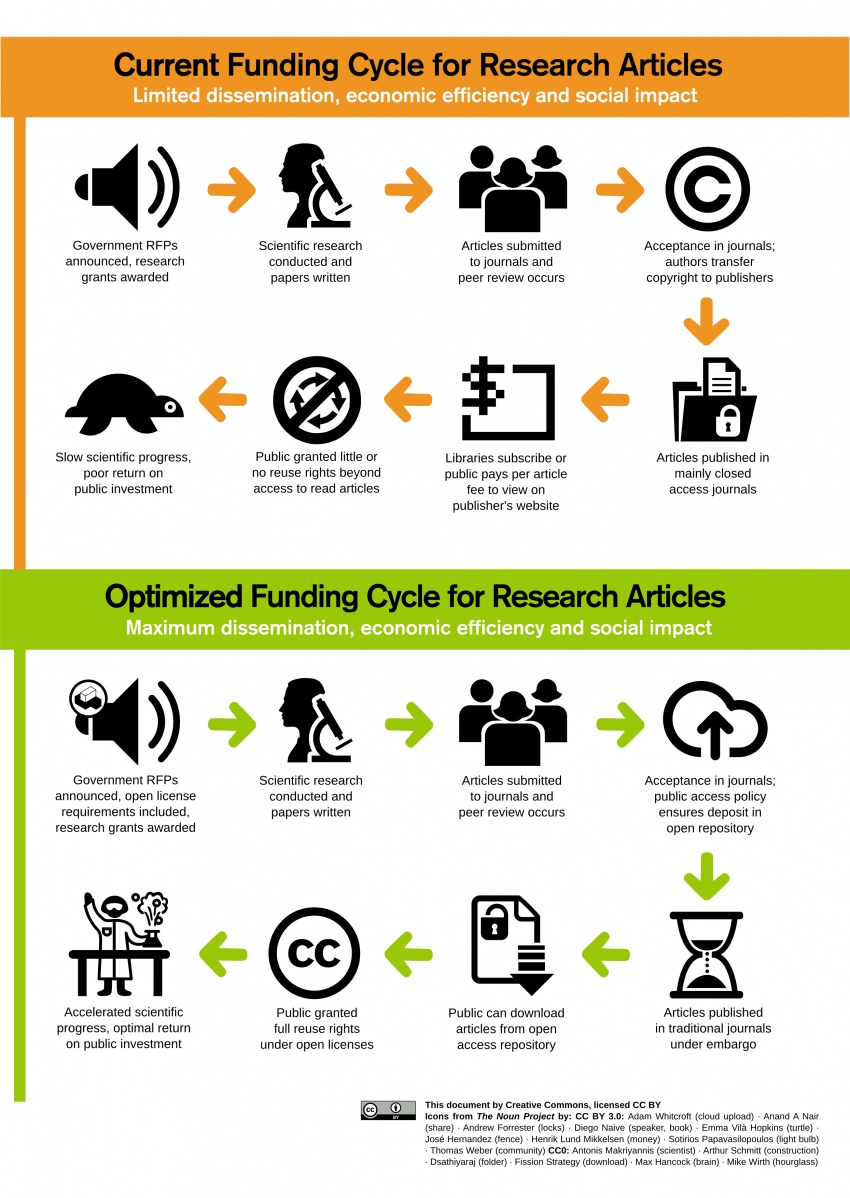
Open Educational Resources (OER) are zero cost educational materials that can be legally shared, used and built upon by the educators and students.
Features of OER:
- Free to Use: OER materials are available either through the public domain or with a license that makes them freely accessible to educators and students.
- Creative Commons Licensing: OER are often licensed through creative commons licenses. Any of the following license types are compatible with OER resources:
- Public Domain
- CC-BY
- CC-BY-SA
- CC-BY-NC
- CC-BY-NC-SA
“5.2 OER, Open Textbooks, and Open Courses” by Creative Commons licensed under CC BY 4.0.
Students save money and have better learning outcomes compared to traditionally published resources.
More Flexibility
OER are more flexible than traditional educational materials, allowing instructors to adapt and remix resources specifically for their classes.
Advancing Academia
The broader, more flexible licensing of OER resources increases the sharing of knowledge between faculty and students which advances the teaching and learning for everyone in academia.
Sources:
“5.2 OER, Open Textbooks, and Open Courses” by Creative Commons licensed under CC BY 4.0.
OER resources allow educators and students to do the following without asking for special permissions:
- Retain: Make, own and manage copies of a resource
- Reuse: Reuse the resources in a variety of ways including in the classroom, in a study group or in various types of online media (video, audio, etc.)
- Revise: Adapt, adjust, modify or alter the content
- Remix: Combine multiple resources to form a new, remixed resource
- Redistribute: Share the original content or any revised/remixed materials
“5.2 OER, Open Textbooks, and Open Courses” by Creative Commons licensed under CC BY 4.0.
Open Access resources focus primarily on research publications (open access journal articles, scholarly books, data) while OER resources focus on education materials for educators and students (open textbooks, open courses, open course materials)
OER are a subset of Open Access materials.
- All OERs are Open Access, but not all Open Access resources are OERs
- Many OA do not allow adaptation for educational purposes.

When we compile a group of works, keeping each work separate and unchanged, we call this a Collection.
When we make changes or combine multiple existing works to create a new work, we call this an Adaptation (AKA a remix or derivative
work).

“CC TV Dinner” by Nate Angell. CC BY. Derivative of “tv dinner 1″ by adrigu used under CC BY, and various Creative Commons license icons by Creative Commons used under CC BY.

“CC Smoothie” by Nate Angell. CC BY. Derivative of “Strawberry Smoothie On Glass Jar” by Element5 in the public domain, and various Creative Commons license icons by Creative Commons used under CC BY.
- Since the individual works remain unchanged,a collection may contain works of various CC license types including No Derivatives (ND) and ShareAlike (SA)
- Each work keeps the license set by its creator and each work's attribution and license type should be clearly displayed
- The creator of the collection may apply a new CC license only for their contribution to the work (compiling, arranging or any of their own original contributions). SA requirements from used works do not apply to collections because no adaptations takes place
- Though various works may be combined in an adaptation, it is still necessary to provide the individual attributions.
- A work with a ND license may be used to make adaptations for private use, but they cannot be shared publicly
- A work with a SA license requires all adaptations be licensed under a compatible SA license
Remixing CC licensed works (n.d.). Creative Commons. 4.4 Remixing CC-Licensed Work - Creative Commons
For example, in assigning a CC license to this water themed playlist, the gathered works have a variety of CC license types:
- CC-BY
- CC-BY-NC
- CC-BY-NC-ND
- CC-BY-NC-SA

Since this work is a collection and no adaptations have occurred, I have not violated the ND license and it's not necessary to apply the SA restriction when assigning a license to my collection . I have simply ordered the 4 tracks and titled the playlist, so I am able to assign a more open CC-BY license. I am also not profiting off this playlist so I have not violated the NonCommercial (NC) requirements.
If, instead of creating a collection I were to adapt these works, my license requirements would change. I would not be allowed to adapt track 1 because it has a ND license Track 4 has a SA license so I would need to license my adaptation under a compatible SA license.
The graphic below shows which Creative Commons licenses are compatible with one another:
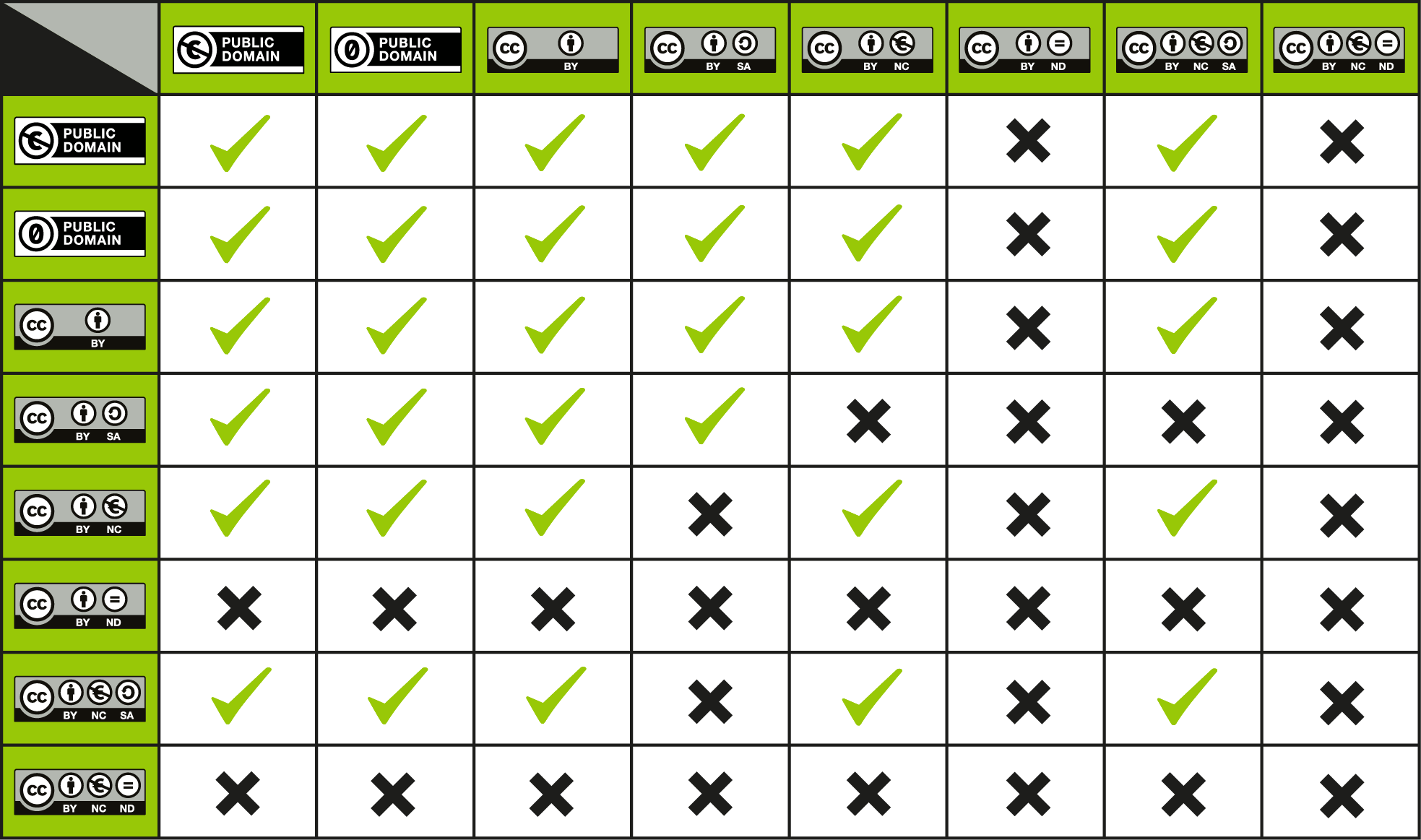
CC License Compatibility Chart / CC BY 4.0
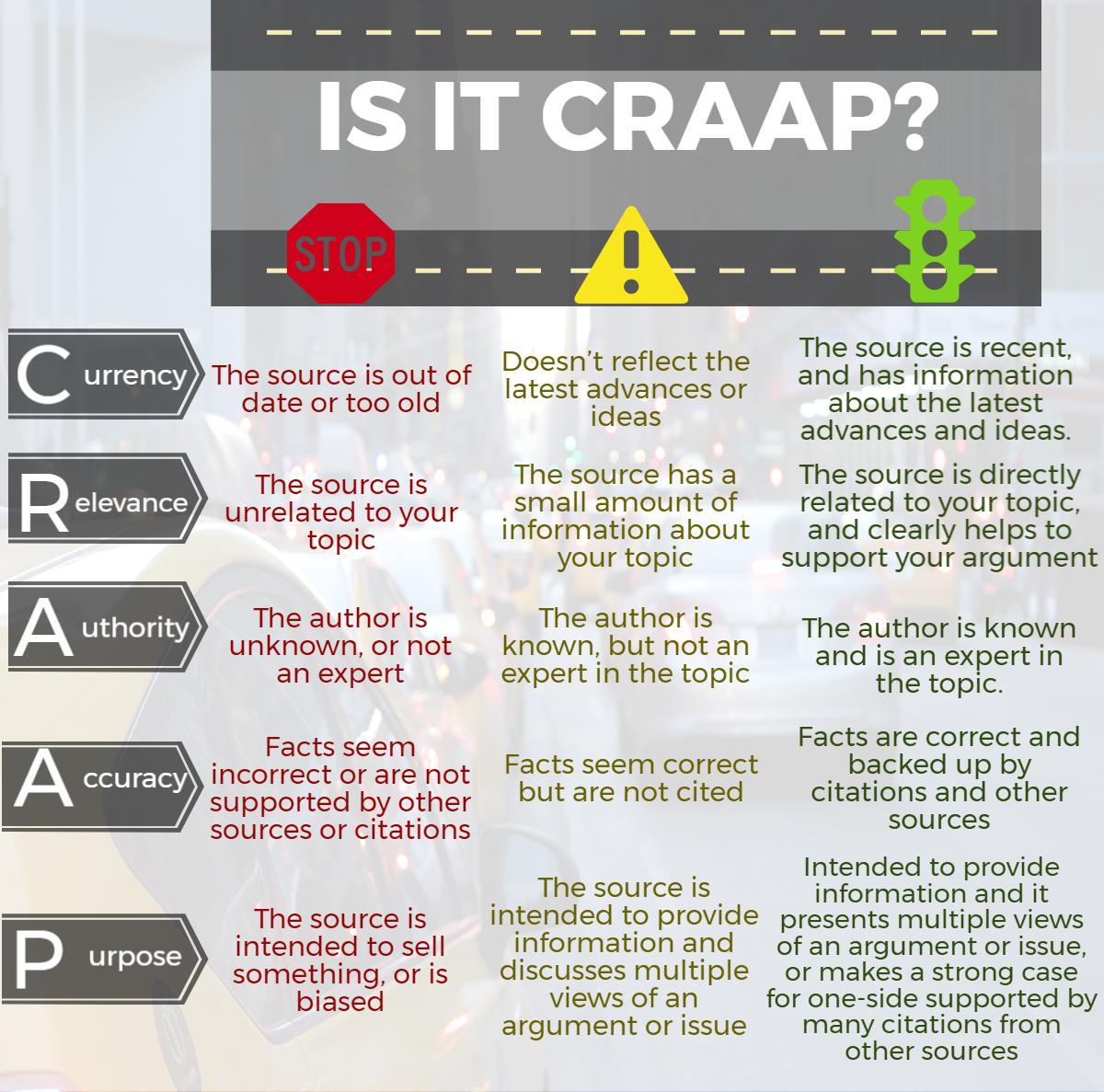
"Media Bias Handout" 2019 by Ame Maloney under Creative Commons Atribution-NonCommercial 4.0
The following rubric created by BCCampus provides further guidance for evaluation when review OER resources:
Content
The text covers all areas and ideas of the subject appropriately and provides an effective index and/or glossary.
Accuracy
This rubric developed by BCcampus. This work is licensed under a Creative Commons Attribution 3.0 Unported license.
Tradional Knowledge is a term othat often refers to cultural works created by Indigenous communities. Traditional knowledge is a broad term that may refer to the sharing of techniques, skills, languages, stories, songs, rituals and other cultural practices that have been preserved and passed down by individual Indigenous communities. While Indigenous communities hold the rights and responsibilities of preserving their own knowledge and practices, historically these rights have often not been respected or acknowledged. Colonialist pracitices often view traditional knowledge as a commodity to be collected and used as desired without permission or protocol.
The traditional view of copyright and expired works entering the public domain is sometimes at odds with the way Indigenous communities understand cultural knowledge and practices. Traditions that are passed down orally are do not meet the requirements of "tangibility" for copyright law, leaving them vulnerable to misuse. While the goal of Creative Commons licenses is to give authority for individuals to set usage of their materials (emphasizing ownership), it also has the goal of sharing information as broadly as possible which is often not the goal of traditional knowledge. These tensions are not easily reconciled, especially with the challenge of the internet increasing the rate at which this knowledge can be shared without proper protocol or respect for the communities involved.
The World Intellectual Property Organization (WIPO) is the United Nations agency that protect intellectual property rights around the world. WIPO has advocated for Indigenous communities that seek intellectual property rights for traditional knowledge and intangible cultural expressions that don't fit easily within traditional western copyright law.
The WIPO Treaty on Intellectual Property, Genetic Resources and Associated Traditional Knowledge also descibes the importance of Genetic resources (GR) to Indigenous communities. GRs are defined in the treaty as "material of plant, animal, microbial, or other origin containing functional units of heredity."
The treaty describes how traditional knowledge and genetic resources continue to drive scientific innovation and there is a need to further expand, enhance and clarify the patent system as it relates to TK and GR (Chan, 2024).
In an interview with Native American Rights Fund (NARF) board member Rebecca Tsosie describes the long term goals of native communities to have a legal system that acknowledges that Indigenous peoples have the right to govern their own property and the acknowledgement that Indigenous cultural expressions and traditional knowledge are forms of intellectual property and are collective resources that cannot be given away by any one individual (Native American Rights Fund, 2017).
Sources:
Chan, W. Y. (2024, November 25). Introduction to the new WIPO Treaty on Intellectual Property, Genetic Resources, and associated traditional knowledge. European Commission IP Helpdesk. https://intellectual-property-helpdesk.ec.europa.eu/news-events/news/introduction-new-wipo-treaty-intellectual-property-genetic-resources-and-associated-traditional-2024-11-25_en
Khan, M. (2018, September 18). Traditional knowledge and the commons: The open movement, listening, and learning. Creative Commons. https://creativecommons.org/2018/09/18/traditional-knowledge-and-the-commons-the-open-movement-listening-and-learning/
Prof. Rebecca Tsosie: Current issues in intellectual property rights to cultural resources. Native American Rights Fund. (2017, June 25). https://narf.org/tsosie-intellectual-property/
Traditional Knowledge Labels
Traditional Knowledge (TK) labels allow Indigenous community to set specific parameters for sharing and engaging with traditional knowledge and other data belonging to Indigenous communities.
TK Labels are organized into three categories:
- Provenance Labels - These labels identify the group which is the primary cultural authority for the material. For example, a TK Family (TK-F) label signifies to external users that this knowledge is typically only shared with family members and is not usually publically available. it asks the user to consider how they plan to respect these cultural values when desiding to use or share this work.
- Protocol Labels - These labels outline traditional protocol that should be followed when accessing this material. For example, a TK Seasonal (TK S) tells the user that there are seasonal conditions that must be followed before accessing and using this material. This could indicate specific times of year this material can be accessed or a specific relationship to the land necessary for proper use.
- Permission Labels - These lbaels indictate activiies that a community has approval as acceptable use. For example, TK Open to Commercialization (TK OC) indicates that the community has the right and is open to opportunities to benefit from the material derived from their traditional knowledge. This label tells external users who the primary partner is for any future negotiations involving commercial opportunities.
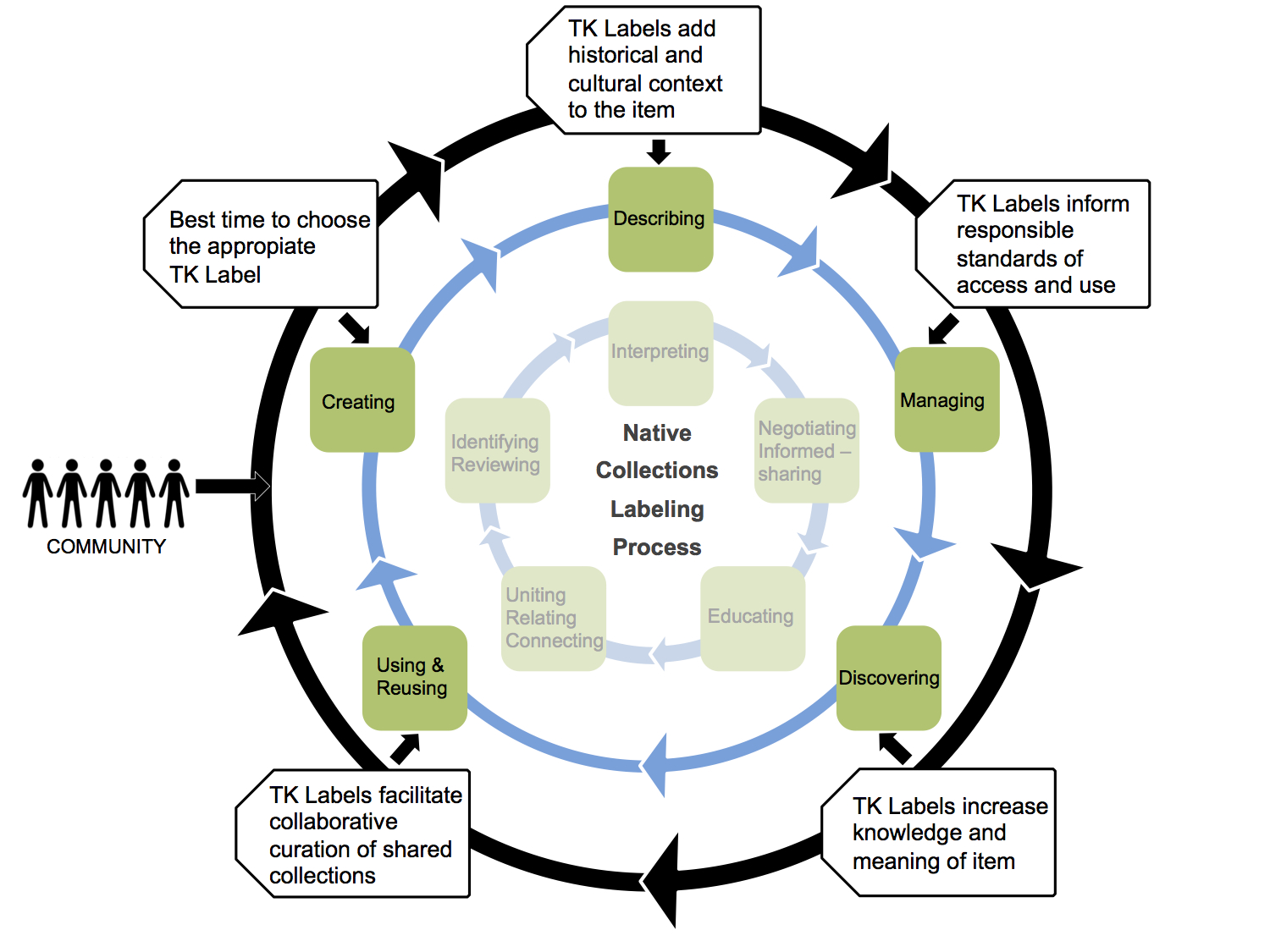
TK Labeling by Local Contexts (2023)
Biolcultural (BC) Labels
In addition to TK Labels, Local Context has also developed BC labels to define appropriate use of biocultura lcollections and data. The goal of BC Labels are to "ensure Indigenous people are represented in the metadata and create opportunities for future researchers to connect and support appropriate benefit sharing."
Sources:
BC labels. (n.d.). Local Contexts. https://localcontexts.org/labels/biocultural-labels/
- The CC Search Portal allows users to search for CC licensed works across multiple platforms.
- Google Image Search includes a filter to limit your results by usage type:

- Wikipedia -- All content is available through a CC BY-SA 4.0 license.
- Youtube has a filter for viewing content with Creative Commons licensing

-
USA.gov Images - A collection of images from the U.S. Government, the majority of which are in the public domain.
-
USA.gov Videos - A collection of videos from the U.S. Government. the majority of which are in the public domain.
-
Wikimedia - A collection of millions media files of different types, all available under open content licenses.
Interested in learning more about the Creative Commons community? There are a number of resources and online groups you can join:
- Become a member of the Creative Commons Global Network. A space for advocates, activitsts, scholars and artists to work together to promote the Creative Commons movement.
-
Join the Creative Commons Zulip to connect with other CC advocates.
- Share your own work with a Creative Commons license! Learn about the different options for CC licenses or use the CC license chooser tool to determine what license is best for you.
Learn more about other areas of the open movement: